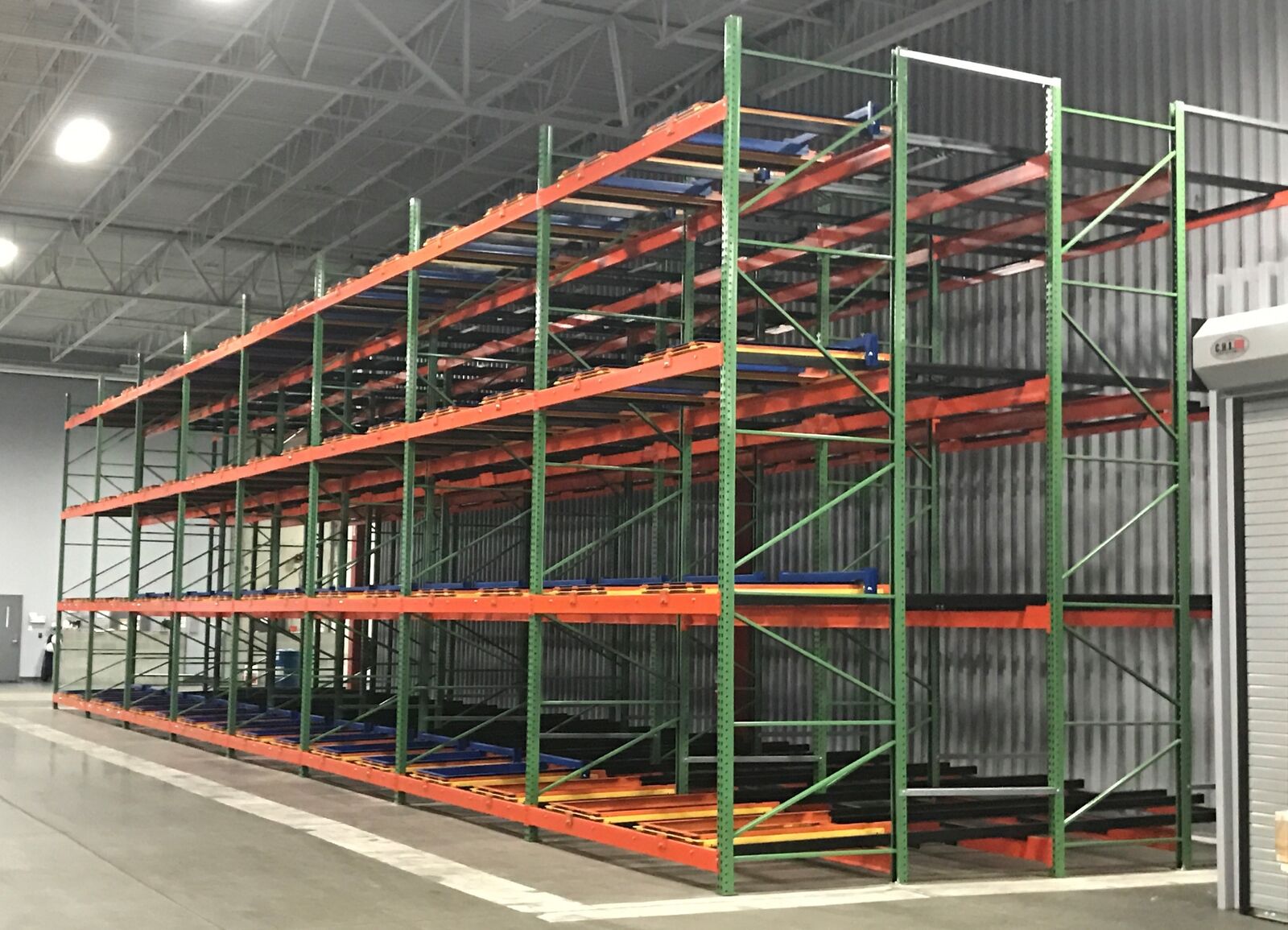
Pushback Rack in Seattle, WA
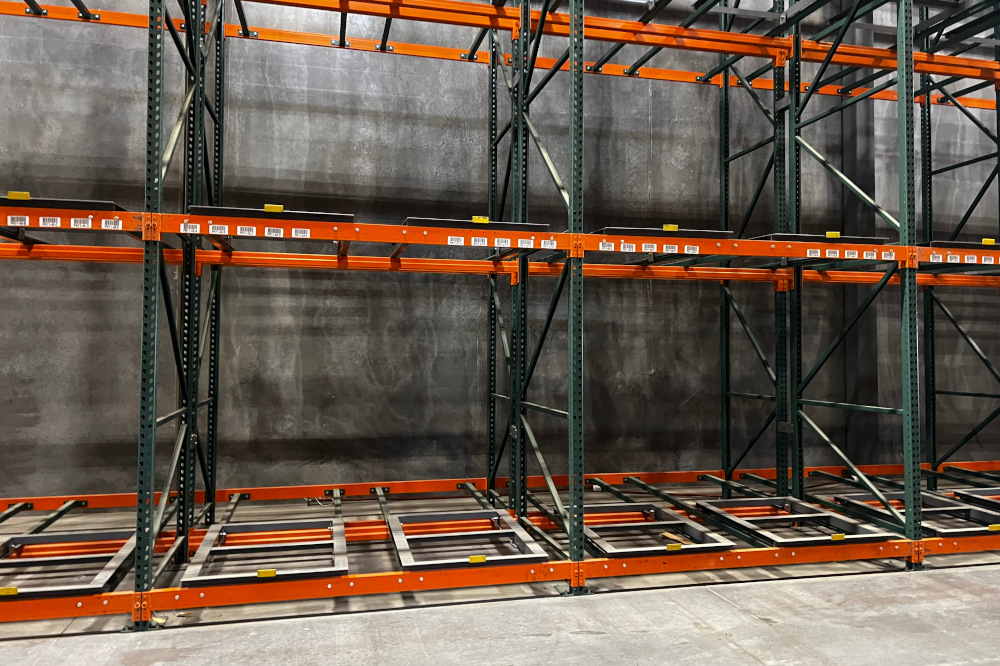
Pushback rack in Seattle concentrates repeat pallet inventory behind one working aisle, using nested carts that travel on inclined rails. Loading another pallet moves occupied carts backward; withdrawing the front pallet allows the remaining loads to advance under gravity toward the unloading position.
This arrangement suits reserve quantities that can follow last-in, first-out retrieval. Before assigning depth, compare pallets held per SKU with the number of separate items requiring access. More positions behind one face will not help if unrelated products continually obstruct each other. Identify which goods can share a withdrawal sequence before committing to the storage footprint.
Where pushback rack earns its footprint
We start with stockholding patterns rather than a target position count. Repeated food packaging or port-related reserve inventory may justify dedicated lanes, while small quantities across many items often need additional accessible faces. The review separates suitable reserves from stock requiring immediate selection, including any freight awaiting an inventory decision after receiving.
Cart travel, pallet support and truck approach belong in the same discussion. We examine pallet dimensions, load overhang and weight variation before choosing equipment, then compare the lane arrangement with receiving movements. Drivers need enough space to present loads squarely and withdraw them with the control required by the selected cart assembly.
This Seattle division of Warehouse Equipment & Supplies Co. draws on supplying and installing storage equipment since 1997. That background informs a written equipment scope linking inventory assumptions to the proposed rack arrangement. The buying team can see which pallet groups the design accepts, and which dimensions or component records still require confirmation.
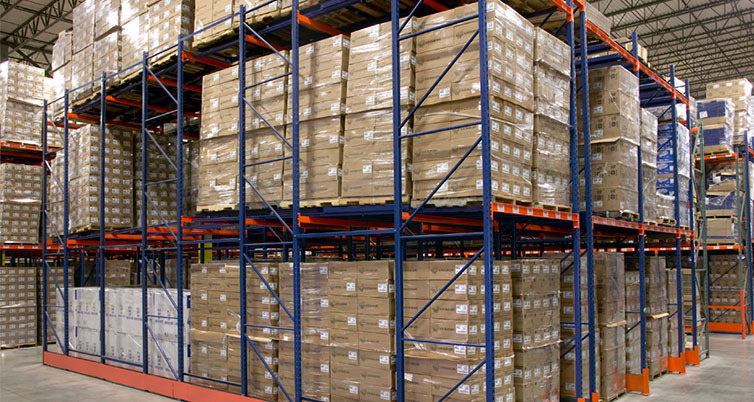
Reserve storage between waterfront receipts and route picking
SODO food operations may need reserve packaging near active picking without surrendering dock staging. Georgetown distribution businesses handling Port of Seattle receipts should likewise distinguish incoming freight from accepted inventory before assigning either group to deeper storage. Draw those areas explicitly, especially when storage, sorting and outgoing orders share the same industrial floor.
Configure push back racking around actual loads
Pushback rack commonly provides two to six pallets of depth, depending on the selected system. Fewer aisles can increase density, but lane occupancy and workable approaches determine whether that density remains useful.
Choose the lane allocation
Compare recurring SKU quantities with proposed depths, leaving enough separate faces for products that cannot share a retrieval sequence.
Match carts and pallets
Check pallet bearing surfaces, dimensions and load stability against the nested cart arrangement and its specified loading sequence.
Establish structural capacity
Use the heaviest approved pallet when evaluating beam levels, frame configuration and the complete supporting rack assembly at full occupancy.
Review controlled handling
Confirm truck approach, pallet placement and gradual withdrawal so operators understand how remaining carts advance toward the aisle.
Specify pushback pallet rack without access compromises
Adding pushback rack to existing steel requires a compatibility review, not an assumption that carts fit any beam pair. Frame geometry, connection details, beam configuration and component condition affect the assembly. Teardrop fit is not universal. Even when nominal bay dimensions appear similar, the supporting members and rail attachments need verification before a conversion is proposed.
Selective storage gives direct access to each pallet position; this arrangement instead places reserve pallets behind the front load. Drive-in storage requires the truck to enter the lane, whereas cart loading occurs from the aisle. Pallet flow uses opposing faces to support FIFO rather than the LIFO sequence described here. Compare these retrieval differences before choosing depth.
A Free Design Consultation compares those alternatives with your inventory profile. We schedule and manage experienced installers around the agreed scope, access arrangements and staging needs. Each level carries a beam-pair rating, whereas frame limits follow its height and the spacing between installed beams. Load plaques state the accepted values, while handover establishes lane assignments and operating instructions.
Seattle storage servicesPushback system optionsCompare drive-in in SeattleFull-pallet rotation in Seattle
Pushback Rack System Details
Bring your reserve inventory into focus
Share a layout and representative pallet details. Call (206) 984-1601.
Seattle Pallet Racks
6727 Martin Luther King Jr Way S
Ste M #1036
Seattle, WA 98118
(206) 984-1601Monday - Friday: 8:00 AM - 6:00 PM
Questions from urban distribution buyers
Other Warehouse Storage Services in Seattle
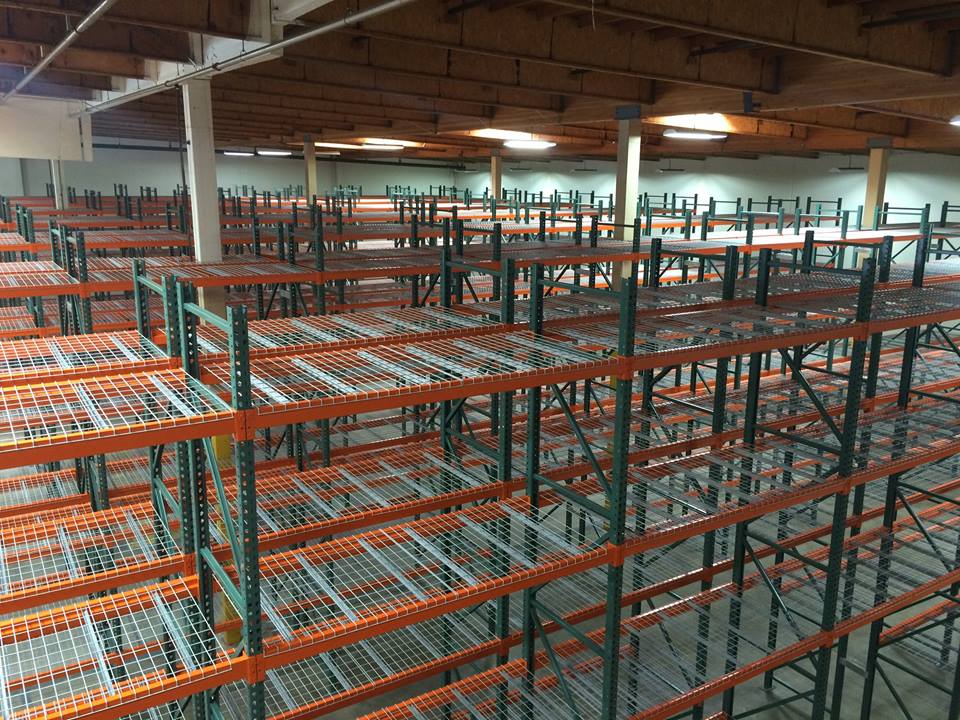
Pallet Rack
Every pallet reachable, every time. The baseline we size everything else against.
View details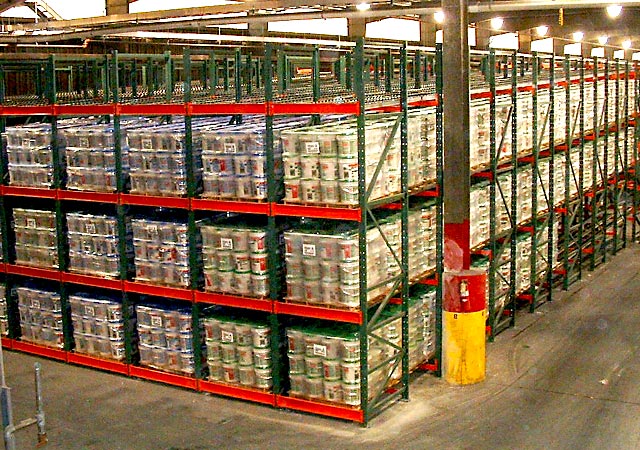
Pallet Flow Rack
Load one side, pick the other, and let gravity enforce first in, first out.
View details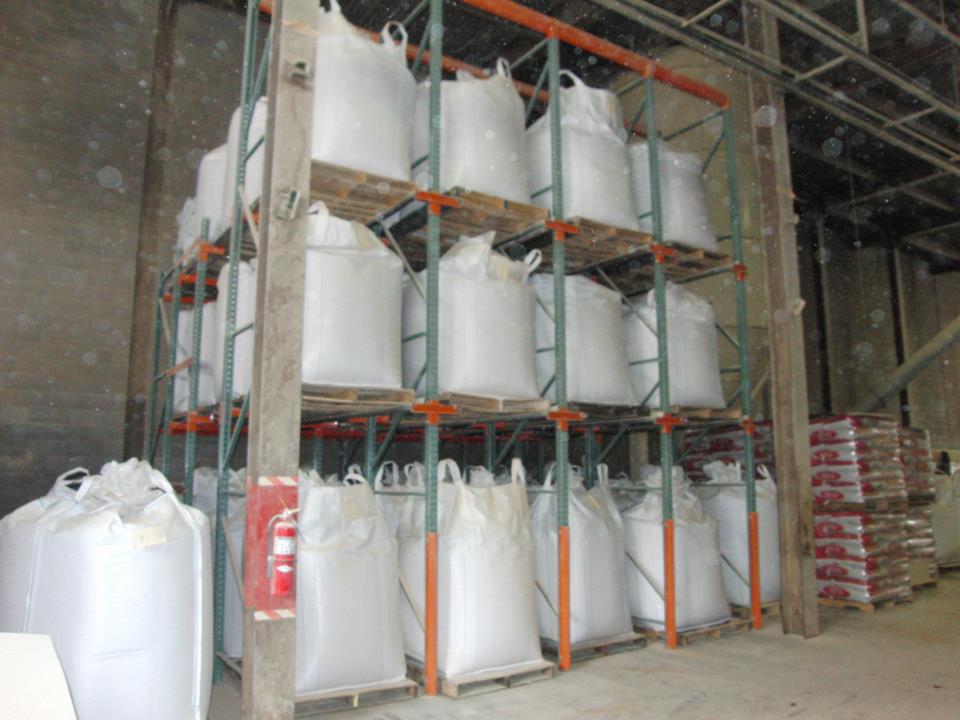
Drive-In Rack
Deep storage lanes replace interior access aisles; the forklift enters the structure to handle bulk pallets.
View details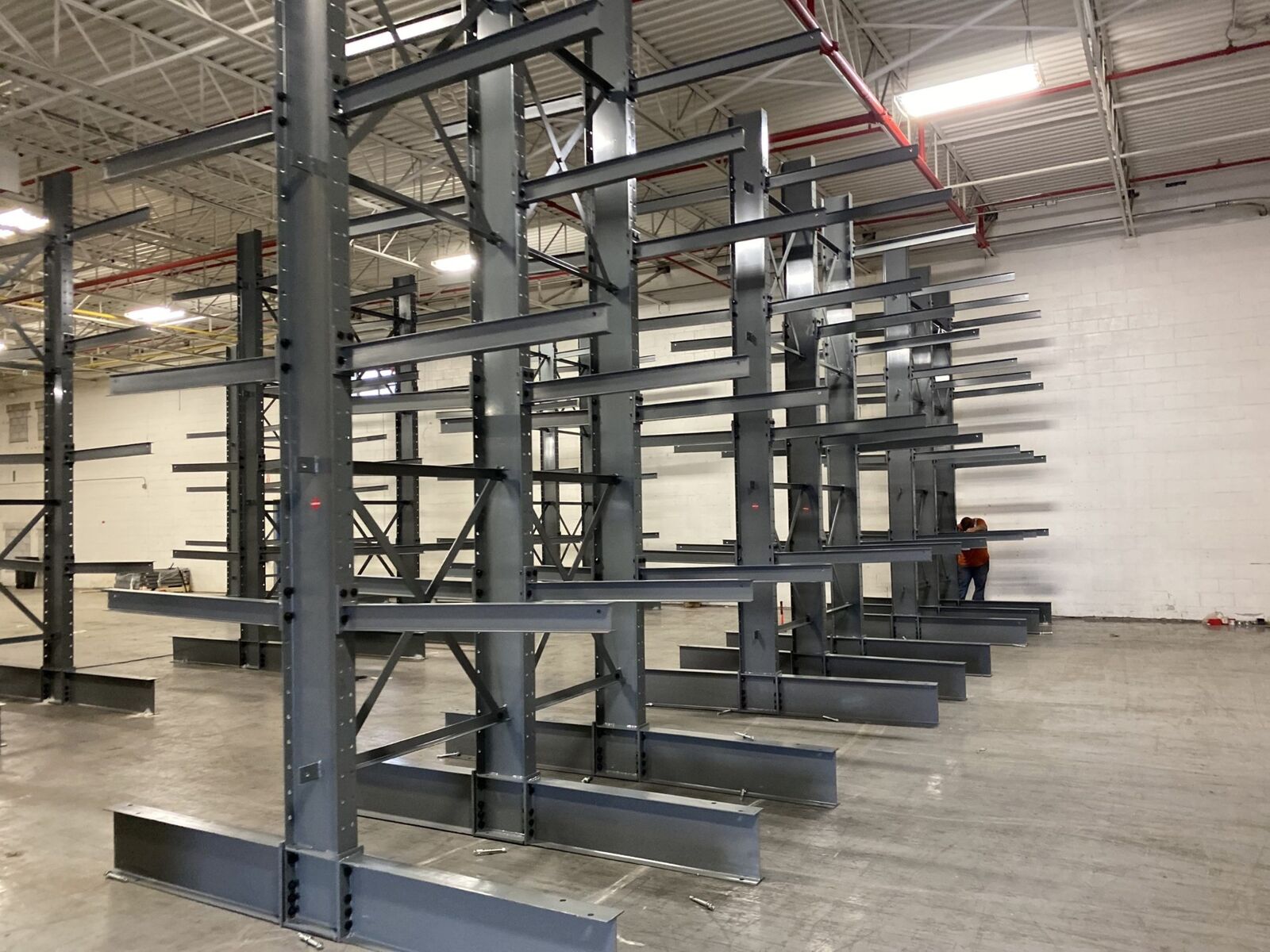
Cantilever Rack
Arms with nothing in front of them, built for lumber, pipe, and anything a pallet can't hold.
View details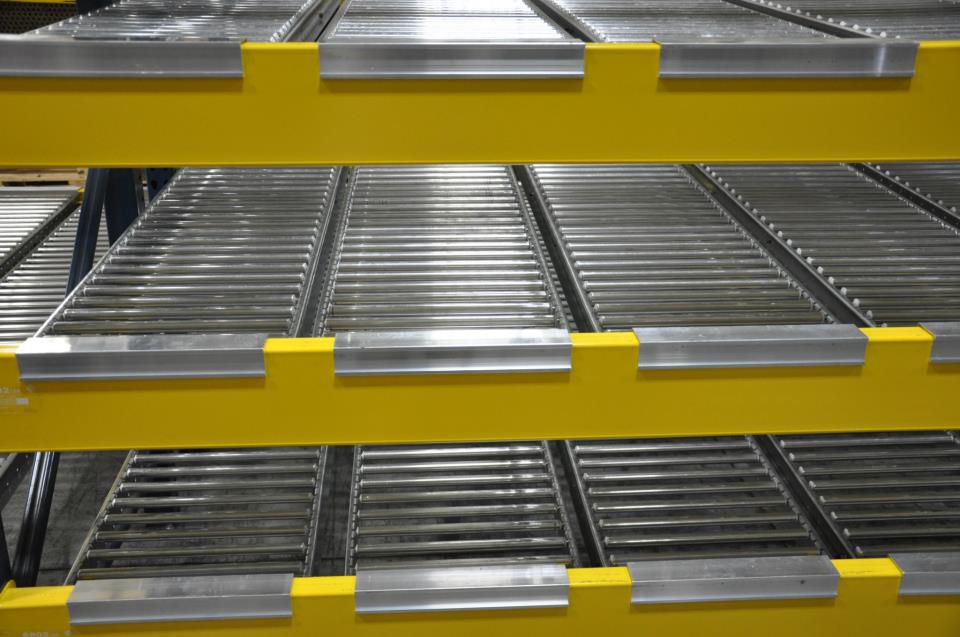
Carton Flow Rack
Cases advance to the picker instead of the picker hunting for cases.
View detailsWarehouse Relocation
Tear down, label, coordinate transport and reinstall your warehouse storage around the next building's layout.
View detailsNearby Areas We Also Serve
Ask about related reserve-storage planning in surrounding industrial communities.
Where We Work
Located in Seattle's industrial area, we serve the entire Puget Sound region with industrial pallet racks and warehouse storage solutions.
Seattle Pallet Racks
Address
6727 Martin Luther King Jr Way S
Ste M #1036
Seattle, WA 98118
Phone
(206) 984-1601Business Hours
Monday - Friday: 8:00 AM - 6:00 PM
Saturday: Closed
Sunday: Closed
Need Pushback Rack in Seattle?
Balance deeper reserve lanes with the access your team needs.